
 Booksology
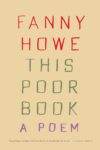
 This Poor Book by Fanny Howe. Graywolf Press, 2026. 144 pages.Buy on Bookshop.org
LARB publishes daily without a paywall as part of our mission to make rigorous, incisive, and engaging writing on every aspect of literature, culture, and the arts freely accessible to the public. Help us continue this work with your tax-deductible donation today!
I THINK OFTEN of these words by Fanny Howe, the late poet and protector of mystics: “A signal does not necessarily mean that you want to be located or described. It can mean that you want to be known as Unlocatable and Hidden.” The quote derives from her essay-manifesto “Bewilderment,” first delivered as a lecture in 1998, and I have always found the contradiction it pinpoints particularly alluring. What would it mean to make a signal that is intentionally “Unlocatable and Hidden”? What shape might that signal take in poetry, which is generally public-facing, and who might such a gesture be made for?
Contradiction and hiddenness are central to the writing of Fanny Howe, who was born in October 1940 under a penumbral lunar eclipse, right at the end of that year’s unusually active eclipse season. The lunar condition of her birth is a fact she mentions frequently throughout her work—which is, appropriately, a long-shadowed corpus of over 50 books concerned as much with darkness as they are with light’s possible, partial glimpses. Howe died after a brief illness last July in Lincoln, Massachusetts, at age 84. Her final project, This Poor Book (2026), which she was working on right up to the end of her life, retraces poems from several collections over the last 30 years and reconfigures them into one long, continuous epic. This Poor Book is an astonishing swan song, a travelogue between worlds, a poet’s version of settling a legacy, and a mystic’s gesture toward a future inheritance for the seekers to come.
Born into one of literature’s most illustrious families, Howe has remained something of an outsider. Her mother was the aristocratic Irish playwright Mary Manning, an expat who cofounded the Poets’ Theatre in Boston, and her father, Mark De Wolfe Howe, was a Harvard professor from one of Boston’s oldest families. Her older sister is the poet Susan Howe. Fanny Howe began her writing career in the 1960s by publishing pulp romance novels to pay the bills, and her work maintained both pulpy and poetic qualities in equal measure, traversing the sacred and the profane, the revelatory and the domestic. “Nothing happened,” she writes in This Poor Book. “No one came. I was one of the lucky ones, / privileged to live a few decades in peace,” only to later give way to the transcendent: “Sound preceding the wind. / Song following the iambic. / I feel you, I feel you coming.” Evidence of a lifetime’s spiritual seeking glitters throughout her work; her vast reading across centuries of mystical and intellectual traditions reveals itself as her poems, novels, and essays trace the “divine darkness” of the Via Negativa Neoplatonists, the Upanishads, Sufi mysticism, the writings of Thomas Aquinas and Simone Weil, and the Irish Benedictine monks of her beloved Glenstal Abbey (Howe’s spiritual home, which she visited frequently for over 20 years). In This Poor Book, however, Howe reminds us that spirituality alone is not enough in an unjust world: “What good is God to those crying out for help?” she asks. “Are they crazy? Why can’t they see that their work was for nothing / but money that went to the boss?” Later, she reminds us, “Money has always / Been huge and out of sight like God.”
Howe—who alienated herself from her aristocratic heritage by marrying Carl Senna, a Black civil rights activist, in 1968, only a year after interracial marriage was legalized—has always trodden between mystic wisdom and emancipatory politics, and This Poor Book is no different. In one of the most memorable lines, she writes, “Stars without light hold the others up,” brilliantly conjuring the networks of invisibility in which modes of resistance are born and carried. Though her marriage ended in “the ugliest divorce in Boston’s history,” as her daughter’s memoir described it, and left Howe a single mother to three children, her commitment to justice never wavered. (In an interview in The White Review in 2020, the interviewer mentions spotting Howe at a recent Black Lives Matter protest. She was 80 at the time.) “No struggle can depend / On individual survival,” Howe writes, and her poem frequently depicts the minor miracles of enduring solidarity: “A Palestinian flag waves / In this small Irish town.”
Howe’s imagery is grassroots on a literal level—a recurrent metaphor throughout her work is that of grass springing back up after being stepped on. In This Poor Book, she describes “brown grasses pansies roses white clematis and hellebore. / Glad to live below and have mercy and no power. // They would crawl backwards rather than climb up to the tower.” This is a poetics and politics of horizontality, where the human and nonhuman segue together in a potent kind of anti-hierarchical resistance. When “God became weak and subtle,” Howe writes, “Birdsong was my last communion.” I see Howe as part of a rebellious tradition, a lineage of politically attuned Catholic writers—like Simone Weil, like Pier Paolo Pasolini—who were also kind of punk.
Simone Weil, who was one of Howe’s most enduring influences, also dwelled in the resistant mystical space of divine darkness—she called it “decreation.” Rather than obscurity for obscurity’s sake, however, this divine darkness is a fecund space of germination. “Is a rose already pink inside its idiot dirt?” Howe asks, and throughout her work, this dark dirt becomes a space for refusal and communal protection. Tellingly, in This Poor Book, it’s only “the police” who come to seek “coherence in everything.” Like experiences of mystical revelation, radical politics also happen in the dark, often, as Howe puts it, “under covers / of night-mist.” This Poor Book is a poem transmitted through the protective cover of night, beginning with the image of “a child / between a star and a boat.” Much like William Blake, whom Howe name-checks in the book, Howe has always venerated the child in her work as well as the childlike perspective of curiosity over certainty, and of naivete over cynicism. Howe once said that the “I” in her poems is “a stranger” to her, “someone ‘sent forth’ like a character in a novel to explore the bizarre nature of being, to touch and feel surfaces, to wander as a child does, invisible, without power.”
In This Poor Book, however, Howe shifts from the child figure to something more like the archetypal crone, or perhaps the cailleach—the ancient, weather-beaten wisewoman of the Irish mythology Howe loved. In this way, This Poor Book becomes a kind of passing of the torch, a gift for the children and grandchildren to come. At the beginning of the poem, Howe’s cailleach-speaker addresses the child: “Let’s pull down the shade then. / Open this poor book and read.” Hiding in darkness, the speaker draws the curtains “to protect the love she can’t carry down.” Down where? Howe converted to Catholicism in 1982, coincidentally the same year she quit cigarettes. But Catholics, if they’re good, don’t descend—heaven is always depicted as somewhere above. The poet Peter Gizzi characterized Howe’s rebellious kind of Catholicism as “true and heterodox,” and elsewhere, the Irish philosopher Richard Kearney described Howe as a “comic mystic, or a mystic comic.” Humor lends Howe’s poems an unusual buoyancy; This Poor Book reminds us that “hurt is the same for all / But manifests itself as rage in one / And giggles in another.” Howe’s irreverent giggling sporadically bursts forth when you least expect it, sometimes childlike, sometimes caustic, with wry statements that are surely relatable to many, such as “I have humiliated myself / so I can participate in the city.”
The mystical descension of This Poor Book also recalls Alice Notley, Howe’s contemporary who died mere weeks before she did. Notley once described her 1992 collection The Descent of Alette as an attempt to write a “‘feminine’ epic.” A feminine epic, Notley suggests, would necessarily incorporate both intrepid katabasis and domesticity—a negative space, a lunar yin underworld to the heroic masculine counterpart. I can’t help but read This Poor Book, which is also a long journey-poem through various underworlds, as part of this feminine epic lineage (a cosmic network that might also include Bernadette Mayer’s 1982 long poem Midwinter Day or Ariana Reines’s 2019 A Sand Book, for example). Howe was a poet who frequently wrote while in transit. Her “I” is often situated on trains, in cars, or walking, recording fleeting images that move like a landscape through a train window: blink and you’ll miss it. The “location of the unconscious,” Howe writes, is an “empty window seat,” and this glancing dream movement is reflected in her line, frequently short, fragmentary, and imagistic:
Spin-driftturns into curlewsconfused by the weather news.The sky is a fish packed in ice.There is a low sunand stiff silver wandson the horizonand the rudder groansas the father and the ghost pass on.
Howe has sometimes been described as incomprehensible—or “an experimental writer’s experimental writer,” as Anthony Domestico put it in Commonweal—but surely this does her a disservice. Ultimately, her work’s mysteriousness is evidence of that signal that is “Unlocatable and Hidden” but that paradoxically emerges, playfully, within the poem. Just like the apophatic mystics she loved, Howe gets close to the heart of the unspeakable by spiraling ever closer around it; it’s her “night philosophy,” as she describes it. Of course, night is also a measure of time, and time, she writes, is “a long and everlasting plain, / You can pass across it any which way you turn. / And walk around the pond with your father again.” One of the great pleasures of reading Howe is this swirling sense of bewilderment, which is also a kind of freedom. In This Poor Book, she invokes Ludwig Wittgenstein, once again from a train:
out of Limerick Junctionto Heuston Station where Wittgensteintried to discover emotion. He hit a horizon. “Philosophy should only be written as poetry.”
This, to me, is the more lastingly compelling of Wittgenstein’s ideas, which always resonated alongside his more often referenced claim about remaining silent “whereof one cannot speak.” Like all the best poets, Howe is a master of incorporating silence within her poetry-philosophy; it’s her way of summoning the inexpressible and making it vibrate through what is expressed. Gaps in language can be a kind of window too, a possibility—line breaks let the oxygen in. Howe’s last poem is like a long, persistent tendril: breathing, spiraling, and green. In one of her most arresting stanzas, she writes, “I had a garden of my own / For twenty-one years. / Seven trees times three / Planted for the first children. // Oh its land was a meadow.” Here, Howe seems to rewild Virginia Woolf’s famous polemic: instead of a private room, let us have a garden. A garden is one of those in-between spaces, neither fully wild nor fully domestic, where “weather is a god / More potent than money / And war.” A garden is like a dream, and a meadow, specifically, is a kind of commons—which, like poetry, can be a public wilderness for anyone who might need it.
LARB Contributor
Maija Makela is a writer and PhD candidate at Trinity College Dublin.
Share
Copy link to article
Heather Treseler accepts the challenge of “The Poems of Seamus Heaney,” a new “definitive collection” of the Irish poet’s work.
Richard Kearney on Fanny Howe’s “The Needle’s Eye.”


