
 Booksology
 Hello, dear reader! Do you like what you read here at Omnivorous? Do you like reading fun but insightful takes on all things pop culture? Do you like supporting indie writers? If so, then please consider becoming a subscriber and get the newsletter delivered straight to your inbox. There are a number of paid options, but you can also sign up for free! Every little bit helps. Thanks for reading and now, on with the show!
Warning: Full spoilers for the book follow.
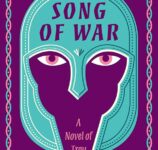
A Song of War, like so many other books, has been on my to-be-read pile for quite a while now. After all, it’s exactly the kind of thing I love: historical fiction set in the ancient world, with several different points of view, and lots and lots of queer folks and powerful women in leading roles. It’s also filled with tragedy and longing and a dozen other rich emotions. In other words, it’s just what you’d want from a modern reimagining of the ancient world’s most famous conflict: the Trojan War.
Split into seven chapters, the book gives us a new spin on the characters that we only thought we knew. Though self-contained, each vignette connects to the others, creating a vibrant, beautiful, and heartbreaking tapestry. Though we’ve seen all these characters before, the authors, one and all, manage to breathe new life into these legends, allowing us to see these individuals anew. Though not every character is particularly likeable–in fact, some of them are downright reprehensible–they all nevertheless manage to cast their spell. Even when you find yourself recoiling from their actions you still can’t help but find them fascinating and understandable.
Tragedy runs like a throughline in this book. One expects this, of course, given the very nature of the Trojan War–no one really emerges from this conflict with anything resembling a true happy ending–and I give each of the authors credit for bringing out the many shades of tragedy. There are, of course, the moments of high drama, but what really hits you in the feels are the quieter moments: Philoctetes sharing an intimate moment with Achilles, recalling the burning desire he’s always felt for the hero; Cassandra pining away her days in prison; Odysseus encountering a young boy desperate for his slain father to return. These moments add a poignant and deeply affecting human dimension to a conflict often more characterized by its big set pieces. (Though it’s also worth noting that there are many such tender and intimate moments in The Iliad, so this collection is definitely working nicely within the Homeric tradition).
To me, the mark of an effective retelling of the Trojan War is an ability to allow the reader to sympathize and cheer for both sides of the conflict, and the mark of a truly great one is its ability to want both sides to somehow manage to come out on top. Many of the chapters accomplish this task with remarkable power, reminding us that all wars often have two sides, that morality isn’t always as clear-cut and neatly cleaved as we might wish.
Take, for example, the chapter focusing on Philoctetes and Penthesilea (Libbie Hawker’s “The Bow”). Throughout the story it’s clear how both characters are guided by their own sense of honor, but the momentum of the narrative drives them both toward tragedy: Penthesilea, haunted by her own demons, goes after Achilles in order to assuage her honor and yet perishes, just as Achilles goes out into the field and is killed by Paris’ treachery. Neither character can escape the fate that waits for them, for all we might wish it might be so. And, since Philoctetes survives, and since we know just how much he loved Achilles, the fact the war drags on even after these momentous events is a reminder of the grinding horrors of war.
I also give this book a lot of credit for giving us a portrait of Agamemnon that is remarkably textured, complex, and nuanced. To be sure, he can be a brute, but Russell Whitfield’s chapter, “The Sacrifice” gives us some remarkable insight into his character. We see the extent to which his actions haunt his every waking moment, how he seems to be aware of the fact his life and his future have been indelibly marred by his sacrifice of Iphigenia at Aulis. Even if he manages to win this war, even if he returns to Mycenae in victory, he will never again truly know happiness.
A Song of War also excels at showing us the beginning, middle, and end of the conflict. Kate Quinn’s “The Apple,” for example, paints a fascinating portrait of Hellenus and Andromache, two people who share a powerful bond but know they can never be anything more than friends. At the same time, they also can only bear witness as Paris and Helen abscond from Sparta, setting in motion the dreadful war to come. Quinn perfectly captures the sense of anger and powerlessness these two people feel as they both stand on the precipice of disaster, thrown into the midst of war by two selfish people who care for nothing beyond themselves.
On the other side of the spectrum we have Aeneas, who is the subject of SJA Turney’s “The Fall.” For most of the book Aeneas is painted as something of a prig, but this chapter fleshes him out, and through his eyes we once again bear witness to a man having to make terrible choices: to separate from his wife (inadvertently sending her to her death); to turn away from those he might be able to help because he’s cursed to fail; to leave Priam and Hecuba behind so he can bear the spirits of the city to safety while his king and queen are butchered and enslaved by the Greeks. It’s a devastating chapter, and it’s the one which really brings home the extent to which the Trojans were always doomed, even if Aeneas is poised to take their spirit to lands unknown.
In short, A Song of War was exactly what I wanted and so much more. It’s the kind of book that makes you want to savor it, even as it makes for such gripping reading that you find yourself tearing through the pages. The fact that this extraordinary group of authors has managed to create a book that is both cohesive and also sparking and flashing with new ideas and originality is a testament to their combined brilliance. If you love antiquity and enjoy seeing it brought to life in ways that resonate with and inspire the present, then I can’t recommend A Song of War highly enough.


