
 Booksology
 Article Views: 600
Sad Dads Selection // Sad Dads Book Club regularly meets, carefully hand-selecting specific book releases for digestion. This literary community is for emotionally intelligent music nerds who read, feel deeply, and sometimes cry at concerts.
join us here -> Website // Instagram // Facebook // TikTok
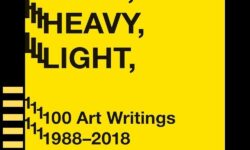
There’s a moment in Hot, Cold, Heavy, Light (order here) where Peter Schjeldahl writes that looking at great art is like listening to a great song. He doesn’t overexplain it. He just drops the sentence and lets it hang. That’s what he does best. He hands you a thought and trusts you to carry it for a while. Maybe it changes you. Maybe it doesn’t. But it stays.
This collection, pulled from decades of his writing for The Village Voice, Artforum, and The New Yorker, is more than just a book of art criticism. It reads like a journal of a very specific kind of loneliness. The kind that comes from wanting to see clearly in a world that mostly wants to look away. Schjeldahl doesn’t write like someone trying to prove he’s smarter than you. He writes like someone trying to understand why a painting made him feel like crying in the middle of a Tuesday. That’s the tone. Earnest. Curious. A little battered.
The book is organized loosely by time and theme, but you don’t have to read it in order. You can drop in anywhere. One minute you’re reading about Vermeer and the quiet mystery of a woman reading a letter. Next, you’re with de Kooning, all energy and chaos. Then you’re standing in front of a Jeff Koons sculpture, trying to decide if the emptiness is the point. Peter Schjeldahl moves through it all with a voice that’s equal parts wry and reverent. He’s never bored. That might be the most generous thing about him.
What makes this collection a fit for the Sad Dads Book Club is that it’s not really about art. Or maybe it’s only about art in the way our favourite albums are only about relationships. The writing is full of grief, joy, confusion, and a sense that beauty matters even when it hurts to look at. He talks about seeing a work by Piero della Francesca and feeling peace so complete he could barely breathe. He talks about hating a show so much that he walked out into the street just to look at anything else. It’s not objective. It’s deeply human.
Schjeldahl is also funny in a way that sneaks up on you. He’ll describe something as “like a wedding cake carved from soap” or call out art-world nonsense with a single line so sharp it leaves a mark. But even when he’s being critical, there’s no cruelty. He believes in artists. Even the ones he doesn’t like. He believes that trying to make something beautiful or meaningful is still worth the effort, even if the result misses the mark. That feels rare.
The emotional backbone of the book is time. Aging is everywhere in these pages. Not as a theme, exactly, but as a presence. You can feel it in the way Schjeldahl talks about seeing paintings again decades later. How things shift. How you change. And how your patience grows and your certainty shrinks. He writes about the death of his father. About addiction. About doubt. He writes like someone who has lived inside his own head for a long time and is just now figuring out how to say the quiet things out loud.
If you’ve ever wandered a museum alone and felt comforted by the silence, this book is for you. If you’ve ever stood in front of a painting and felt something you couldn’t name but didn’t want to leave behind, this book is for you. And if you’ve ever read a line in a song and thought, I wish I had written that, Schjeldahl is the kind of critic who reminds you that writing about art is also an art.
Hot, Cold, Heavy, Light doesn’t tell you how to feel. It just opens a door. You can walk through or not. But if you do, you might see the world a little differently. You might even start noticing the light in your living room at 4 pm or the curve of someone’s shoulder, or the way certain songs make a room feel bigger. That’s what Peter Schjeldahl does. He makes you want to pay attention. And in a world like this one, that might be the most tender thing a writer can offer.
Publisher: Abrams PressPublication date: June 4, 2019Language: EnglishPrint length: 400 pagesISBN-13: 978-1419734380


