Home »
Blog »
Touching tale of finding love in later life Touching tale of finding love in later life
“I’d like to know what it’s like to wake up beside you,” June tells Ray in Best Friends.
“Like waking up next to a boulder,” is Ray’s characteristically deadpan assessment of what she can expect.
The exchange captures the wry, offbeat sensibility that embroiders Andrew Meehan’s novel.
Trilling with understatement and crafted in a deceptively simple style, Best Friends takes unlikely romantic material — two outsiders in their 70s — and fashions a tender story about risk, fate, and second chances.
If the novel’s unsentimental depiction of love in later life echoes Elizabeth Strout, its short form (189 pages) and succinctness is redolent of Claire Keegan.
A janitor at a public tennis court, Ray has been a lollipop man, a Samaritan (“not a very good one”), and recently realised he likes talking to people.
His portfolio of conversation topics includes church roofs, the Holy Roman Empires, low blood pressure, the afterlife, and astroturf.
June is a cleaner and possesses “a fine big forehead you could write a shopping list on”.
Apart from her beehives, June feels she has little to show for a life franked by thwarted ambitions.
In spare but vivid prose, Meehan evokes June’s visceral sense of being forgotten (“she’s yesterday’s eyeliner today”) and how this festers resentment (“she’s too old for people breathing while they eat”).
Both live in affluent Glasthule but their financial precariousness marks them as outsiders.
This is amplified by their shared feeling of social estrangement. Loneliness is one of the book’s primary colours.
June was married three times but her days are dominated by “crying out for company” and the shame this induces.
Wounded by love, June protects herself by not asking much of others.
Meanwhile, Ray has never had a romantic relationship.
Even though he falls in love six times a day, “the love part of love” eludes him.
The pain of their isolation is the unspecified “something” from which both are running.
Their tentative, fledgling relationship offers both protagonists a belated chance at redemption.
When he is five minutes late for an appointment with June, Ray views it as time with her that’s been stolen from him, and he’s excited by the “glamorous folds” of her stomach.
Before they met, June had almost extinguished the part of herself that was susceptible to hope (“it was like avoiding sugar”).
Seeing Ray’s ease with his vulnerability, June starts to accept hers.
Reassessing her previous exasperation about others’ shortcomings, June embraces Ray’s flaws and comes to a new understanding: “When you fall in love with someone, you fall in love with yourself too.”
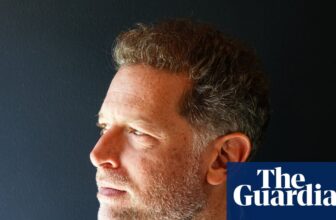
Meehan is the author of three previous novels, including The Mystery of Love (2021) — a reimagining of Oscar and Constance Wilde’s doomed marriage, from her perspective.
That Best Friends pulses with a deft storyteller’s intuition of structure and is embossed with a cinematic eye for detail isn’t surprising — Dublin-born Meehan teaches creative writing at a Glasgow university and previously developed scripts at the Irish Film Board.
The novel has been optioned and he’s already working on the screenplay.
Best Friends is splattered with astute observations and imaginative prose: A breeze carrying smoke from a barbecue resembles “dry ice from a Duran Duran video”.
Running through the novel like a watermark and mirroring its whimsical tone is Meehan’s wordplay.
“June,” we’re told at the start, “needs June to be little less and little more.”
This acrobatic exuberance reaches its climax when, after a traumatic experience, the couple glimpse their future together.
“They are the for in forever, the never that’s not in forever, the ever in the never that’s not in forever.”


 Booksology