
 Booksology
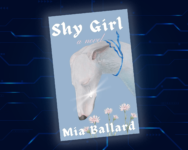
 When I first read “Shy Girl” by Mia Ballard in January 2025, it became one of my new favorite horror novels.
It’s rare to find a femme indie author who writes extreme horror stories that resonate so deeply, even if the prose is a little purple and the metaphors don’t always make sense. Sometimes it’s the thrill that gets you, the catharsis, the rage.
In hindsight, the book came out suspiciously quickly. Ballard had released “Sugar,” another horror book, in 2024, and the initial self-published version of “Shy Girl” followed in early 2025. Wanting to see the best in one of my favorite authors, I didn’t think much of it beyond assuming she had a good work ethic.
But, as The New York Times later revealed, the book was 78% AI generated. I didn’t know that yet. I was just a critic who wanted to champion my favorite books. What I didn’t expect was that “Shy Girl” would force me to grapple with the ethics of publishing, and my own work as a critic.
At the time, I liked “Shy Girl” so much that I gave it a rave review on NetGalley, a website where booksellers and librarians can read advance reader copies before they are available to the public. Shortly after I posted my review, Ballard reposted it to Instagram, which opened up a DM conversation between us. I thanked her for writing such a powerful story, one that I felt in my bones as a woman with obsessive-compulsive disorder. Ballard was lovely, someone I really respected in the horror space.
I am also part of the femme horror community, writing book and film reviews for Rue Morgue, a magazine that focuses on analyses of horror media. Since Ballard and I were connected on Instagram, and I reviewed horror books, it made sense to review “Shy Girl” again for the magazine now that it was being traditionally published by Hachette. My editor commissioned a full-page review, complete with an interview with Ballard over email.
The review was published in the March/April print edition of Rue Morgue. A month later, while working my day job as a bookseller, I checked my email and found a message from my editor: A New York Times article about “Shy Girl” reported that the book was being pulled from publication because it was AI-generated.
I was devastated, and frankly felt like an idiot. How could I, a book critic and an avid AI hater, not notice — in the two times that I read “Shy Girl” — that it was AI-generated? How could I be deceived by someone I respected, someone I had messaged with and interviewed, and not know a thing?
I am not here to dogpile on Mia Ballard. I’m disappointed, but she’s still a person, and doesn’t deserve to be burned at the stake — especially while other authors who use AI, like James Frey, continue to have careers. AI is now everywhere in the publishing world. A quick look at NetGalley shows an array of AI-generated covers, and at least one romance author claims to generate over 200 books a year with ChatGPT. There are even courses that teach authors how to generate books with AI for maximum profit, as though that were the entire point of writing a book.
It may be the future, but it makes me question how I’m supposed to do my job.
From my perspective as a critic, I find it unsettling that AI has permeated every facet of writing and art. Critics do their jobs by critiquing not just the finished product, but the work that someone put hours into, and the expertise, skill and hard work that they used to create the book. The process matters, and the feedback I give is a reflection of it.
That’s part of why so many readers and writers have pushed back against the AI revolution. Why would we want to read something that no one bothered to put work into? Readers expect a certain level of pathos, a certain human quality to writing that a machine cannot replicate, not all the predictable and typically noticeable attributes of ChatGPT.
But when I can’t discern between AI-generated content and a human-written novel, even to the point of genuinely liking the book, what does that mean for my work as a critic? What does that say about my taste?
It’s not just me who was fooled. It was Hachette, too. It was the 1,800 people who bought “Shy Girl” in the UK. It was the countless reviewers like me who gave rave reviews, added blurbs to the cover and then had to ask for them to be removed and did damage control on their Bookstagram accounts.
This is a significant moment for the publishing industry. AI-generated books are slipping under the radar, being presented as human-written books without disclosure, and professionals aren’t catching them.
It makes you wonder how many other books went unnoticed, who weren’t caught by The New York Times and publicly shamed. This could be the future of publishing. Publishers may care now, but the technology could get good enough to regularly pass as human-written work. The industry is already overrun with AI content — “slop,” as it’s colloquially referred to — and it doesn’t seem to be going away any time soon.
If more and more AI books come out at a rapid pace, they will eventually overtake the industry. Will the role of the critic become redundant?
So my job as a book critic now comes with an added caveat, and I’m sure other critics feel the same way. We handle every book with gloves, never sure if we’re reviewing work that aligns with our ethics. We don’t want to promote something antithetical to the act of writing, something that a lot of us continue to speak up against.
Ballard has continued to deny that she used AI to generate the book, claiming an editor acquaintance must have run her book through a large language model. I don’t know if anyone’s buying it. If Ballard truly wrote the book using exclusively her brain, shouldn’t she have the receipts to back it up?
Some reviewers are still defending Ballard, which I get, as a lot of us were friends on Instagram with her before she deleted her social media. But a Big Five publisher doesn’t just pull books for no reason. It’s completely unprecedented, and no one really knows quite what to do.
As a book critic, I have to take it on the chin and acknowledge I was fooled. A lot of us who championed “Shy Girl” have to. I’ve never used ChatGPT and never will. I loudly lambaste writers who use AI in any way. I went so far as to disable AI summaries in my Gmail. And still, I have to accept that I respected, and even enjoyed, a book that was reported to be 78% AI generated. My editor and I thought a book by a Big Five publisher would be safe, but we were wrong.
It’s very easy to look back at passages of “Shy Girl” and think, yep, that’s ChatGPT. It’s easy to spot if you’re looking for it. But the technology is getting better every day. I know authors who are getting payouts from class-action lawsuits because AI is actively stealing their work, training on it so as to emulate their writing style. It may become indistinguishable soon enough, and I’m sure a number of books have gone unnoticed already.
It changes the role of the reviewer, giving us the extra job of figuring out whether the book we’re reading was written by a human being. I never thought that would be part of my job description.
I’ve become more wary of the things I consume. The day I’m writing this, I reviewed a horror short film for Rue Morgue and noticed several of the images in it were AI-generated. I flagged it in my review and informed my editor that it featured AI content, and told him it was under his discretion whether or not to promote this film. Going forward, this is the process I’m going to have to continue as a critic. If something strikes me as AI, I will not censor my thoughts. I will always tell my readers if I see something in the piece that seems to be AI.
More broadly, I think all critics are going to have to be more vigilant. We need to let our readers know when our instinct screams AI. We need to pay attention when an author puts out multiple books in a year, writing suspiciously fast. And we absolutely need to own up to our mistakes when we’re fooled.
While AI might be helpful in science or medicine, there is no reason for it to take over the arts, aside from obvious capitalistic intentions. And as much as I respected Ballard, you are simply not an author if you did not write your own book.
A writer doesn’t generate. A writer writes.


