
 Booksology
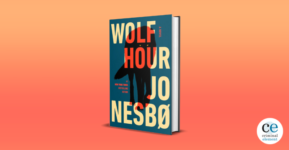
 From “one of today’s most interesting thriller writers” (Lee Child) comes an immersive, propulsive novel in which a detective and a crime writer conduct parallel investigations, six years apart, into a series of puzzling murders. Keep reading for Doreen’s review.
Jo Nesbø’s latest novel translated into English, in this case from the original Norwegian by Robert Ferguson, is a multi-layered puzzle box, unfolding in both 2016 and 2022. In the chapters set in 2016, a serial killer terrorizes Minneapolis, with disgraced cop Bob Oz hot on his heels. The chapters set over six years later follow Norwegian author Holger Rudi, beginning from his arrival at the airport as he answers a US Immigration officer’s question of why he’s come to America:
(I)nstead of following my instinct to reply “murder” and end up in an interrogation room I tell him that I’m writing a novel about a policeman with Norwegian heritage.
“So you’re a writer?”
I feel like telling him I’m a taxidermist. I stuff things. That I’m here looking to clothe a character, someone in a story I already have clear in my mind. It’s an image that has haunted me these past few months, a title I like to give myself. But as I say, I’m tired.
“Yes,” I reply.
That ever so slight disconnect between creating worlds via writing and restoring a semblance of life via taxidermy permeates the rest of the novel – perhaps unintentionally, though given the crucial role of the latter artform throughout the story, I suspect not. There’s an uncanny valley, preserved in amber effect to the narrative that sometimes feels like it’s drawing from the zeitgeist of the 1980s, despite ostensibly depicting events from a mere decade or so ago. This could be due to the author’s own status as an outsider, one who clearly loves the United States of America but who still brings a different, and often critical if still even-handed, perspective to the proceedings. In all fairness, I couldn’t decide whether I liked this overall effect or not. The resulting story is, however, undeniably gripping, as the Rudi of 2022 follows in the footsteps of a 2016 serial killer and the cops who hunted him down.
A large part of my absorption in this novel was due to its deep dive into the psyche of Bob, the lone wolf homicide detective with anger issues. Bob doesn’t have the best reputation among his fellow officers, who call him a coward because he refuses to carry a gun. Despite this, he’s got a solid solve rate, and is first on the scene after a sniper’s bullet takes down Marco Dante, a notorious weapons dealer.
Trouble is, Dante doesn’t die, yanking the case right out from under our protagonist. Bob, however, is already on the trail of the shooter, a middle-aged man who seems to have finally snapped and gone on a crime spree that does eventually lead to fatalities. The more Bob learns about former gang member Tomas Gomez, the more invested Bob feels in apprehending him. As he stands in Gomez’ apartment some days into his unauthorized investigation, he begins to question his own quixotic devotion to solving this case:
What was it about the Gomez case that had him sitting here now, risking the little that was left of his career? It wasn’t the victim. Was it Gomez himself, the points of similarity? Was it because he knew how Gomez was feeling? That Gomez had actually done something he had imagined doing himself, and even felt close to doing, waging an all-out war, with no thought of the consequences for himself? But if it was true that he identified with Gomez, then why was it so important for Bob to stop him, of all people? Because it would be the same as stopping himself?
Mr. Nesbø really gets into the heads of both the police personnel investigating the crimes and the unrepentant killer, a man whose grief and loneliness have driven him to the ultra-violence of vigilanteism. It’s hard not to feel sympathy for Bob and Tomas, flawed as they both are. Being moderately familiar with Mr. Nesbø’s prior works, I wasn’t entirely surprised by the twists regarding the killer’s identity, though there is a scene with a figure in a wheelchair that felt like the literary equivalent of a perfectly executed jump scare.
Wolf Hour is a can’t miss for fans of Mr. Nesbø’s, and for anyone who’s curious to see how the Nordic Noir genre can be applied to our own country. The book raises thoughtful questions about the USA’s relationship with guns, framed as a love letter from someone who genuinely admires this country and cares about its people. That may feel polarizing for some readers, but there’s no denying the good intentions that shine through the writing of this novel.
Learn More Or Order A Copy


