
 Booksology
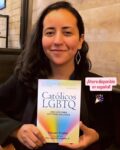
 In 2022, Paulist Press published Yunuen Trujillo’s LGBTQ Catholics: A Guide to Inclusive Ministry, which was reviewed here on Bondings 2.0 by Mark Guevarra who described it as “essential reading.” Since then Paulist Press issued a Spanish language version of the book, entitled Católicos LGBTQ: Una Guía Para Pastoral Inclusiva, which is being reviewed here today from a Latinx perspective by Miguel H. Diaz, Ph.D., who holds the John Courtney Murray, S.J. University Chair in Public Service at Loyola University Chicago. Professor Diaz served as the U.S. Ambassador to the Holy See from 2009 to 2012 in President Barack Obama’s administration. He is the author of Queer God de Amor, a reading of St. John of the Cross’ Dark Night of the Soul, from a queer Latinx perspective, published by Fordham University Press.
Among her many involvements with Catholic LGBTQ+ ministry, Yunuen Trujillo is a member of New Ways Ministry’s Board of Trustees and is a regular contributor to Bondings 2.0.
Católicos LGBTQ: Una Guía Para Pastoral Inclusiva offers a valuable introduction in Spanish for those engaged in ministering to LGBT Catholics. Beyond a Prologue, written by Sister Jeannine Gramick, SL and an Introduction, the book’s six chapters explore familial, social, and ecclesial challenges that LGBT Catholics face. Throughout the book, Yunuen Trujillo taps into personal experiences, including her own, to highlight the life-suppressing and life-threatening effects that arise when pastoral practice fails to address these challenges. Her much-needed pastoral reflections on LGBT ministry map some steps that churches can take so that ecclesial ministry can become more “catholic,” that is, inclusive of all baptized members that constitute the body of Christ.
As a queer Latino Catholic, I find that this book gifts us with a much-needed resource in Spanish for priests, pastoral lay leaders, and families to use in facilitating conversations with Latinx LGBT persons. Within Latinx communities, cultural, familial, and religious ideas often work in tandem to suppress LGBT persons from living their God-given truths. Fear of rejection and the threat of losing highly valued familial, communal, and religious bonds often keep Latinx queer persons in the closet.
This book responds to some of these oppressive experiences, and it leaves me thirsting for more pastoral work to be done to respond to the concrete experiences of queer Latinx Catholics. While the book casts a wide net and offers valuable resources for ministering to all LGBT Catholics, the distinct familial and ecclesial challenges faced by Latinx queer Catholics and other underrepresented queer bodies merit further study. Gaining this understanding would strengthen the central objective that this book presents: To create inclusive and concrete pastoral practices that respond to sex-based and gender-based marginalization and oppression.
Chapter One focuses on the need to develop pastoral ministry that addresses the concerns, misunderstandings, pain, and rejection that LGBT persons and their family members often face. Chapter Two explores what it means to be both “catholic” and a member of the LGBT community, affirming the genuine religiosity and search for God found in faith-filled LGBT persons, rejecting the false binary between religion and LGBT persons. This binary, which reduces LGBT persons to their sexual orientation/gender identity, stands in the way of embracing the omnipresence and omnisexual presence of God.
Chapter Three examines existing pastoral approaches to LGBT Catholics and calls for the creation of effective, non-judgmental, and inclusive ministry. It explores the “dos” and “don’ts” of various models of ministry at the parochial, diocesan, and national level and their relevance for LGBT Catholic ministry. It offers practical guidance for creating ministerial outreach, lists and discusses various educational and religious resources, and provides information about religious communities and lay organizations that serve the needs of LGBT Catholics.
Chapter Four discusses fundamental principles of Roman Catholic teaching, especially underscoring the dignity of all persons, the need to reject all forms of sex-based and gender-based discrimination, and the oft-forgotten fact that the call to live chaste lives applies to all, including LGBT persons. But as Trujillo points out, chastity does not equate with celibacy; it concerns living a life of integrity and embracing human sexuality as a gift from God. This chapter also looks at LGBT lives through the lens of the following building blocks of Roman Catholic Social teaching: 1. option for the poor, 2. respect for life, 3. right to work and 4. the common good. Finally, Trujillo addresses the weaponization of biblical passages (often known as the “Clobber passages”) and the irresponsible and misleading use of the Catechism’s categorization of the sexual orientation of LGBT persons as “intrinsically disordered.”
Chapter Five takes up the theme of pastoral care by exploring the Church as a place where pastoral caregivers should encounter, listen to, and accompany LGBT persons. This praxis enables the Church to become a safe space where LGBT persons can experience welcoming and inclusive relationships. As Trujillo highlights throughout the book, inclusion of LGTQ persons is oftentimes tragically missing within ecclesial spaces.
Chapter Six focuses on the all-important spiritual subject of personal discernment. In this last chapter, Trujillo shares her own “coming-out” journey and her discernment to serve and minister to LGBT persons within the Church. The book concludes with three appendices that explore stories of LGBT Catholics, provide sample mission/vision statements in support of LGBT ministry, and offer prayers that can be used with LGBT persons and their parents.
Trujillo’s book affirms the cornerstone of Christian doctrine: “God is mystery and so is God’s creation.” God, she argues, “cannot be trapped in any box.” As she rightly observes, all of creation and the signs of our times continue to reveal God’s mystery and God’s never-ending love. The Church’s business should be about discerning and empowering this theo-centric orientation. The focus should not be on limiting human persons to their sexual orientation.
The failure of those in ministry to recognize these fundamental theological truths stems from socialized and internalized heteronormative and heterodox lies that continue to shape the life of all believers. These lies trap LGBTQ+ persons into believing that they are unlovable by God, that their sexual desires are “objectively disordered,” and therefore, that their human lives are irreconcilable with God’s life and God’s will. But such beliefs traffic in idolatry. Rejecting gender-based and sex-based idolatry demands that every person who ministers to LGBTQ+ Catholics should consider and ponder inclusive and just pastoral responses to the following salient questions that Trujillo fittingly raises: “Are we paying attention?” and “Are we listening?”
–Miguel H. Diaz, Ph.D., January 31, 2026


