 Booksology
 While there is merit in this short collection on Indigenous-themed works, the paired structure of research essays with literary works is somewhat unsatisfying
By James Baron / Contributing Reporter
As explained by Huang Chun-ju (黃俊儒) in one of two prefaces to this short volume, in pairing works of academic research with literary works, the aim was to create a dialogue between the two fields.
“Together, they create reciprocal interpretations that are intellectually and affectively rich,” writes Huang, director of the Department of Social Sciences at Taiwan’s National Science and Technology Council.
In collaboration with National Museum of Taiwan Literature (NTML), the NSTC sponsored the publication of this book by Balestier Press, a London and Singapore-based publisher. It is part of a project under the grand title “A Thousand Words Across the Miles: The Translation and Global Publication of Taiwan’s Humanities and Social Science Research.”
The guiding themes for the series, which includes a five-volume Chinese-language series and nine books in European languages, were “indigeneity, ethnicity, ecology, food culture and economic transformation,” with this collection falling mainly into the first category.
Huang’s remarks on the interplay between the texts are reinforced in a second preface by Su Shuo-bin (蘇碩斌), a former NTML director.
Emphasizing that “no human truly lives by only one form of knowledge,” Su writes of the pursuit of understanding “through both reason and emotion” as the essence of humanity.
“In this anthology,” Su writes, “they intersect and merge in a creative publishing experiment.”
While the creativity of this approach can hardly be doubted, the success of the endeavor is questionable.
There is some decent writing and valuable insight from both spheres, but — too often — the structure of one academic work or essay followed by an accompanying literary work feels contrived, dispassionate and even confusing.
How much of this is down to the decision to adapt the original essays, some of which incorporate fragments or input from other works, is difficult to say.
The need for the adaption is not clearly explained in the introduction by Chang Ti Han (張迪涵) and Hsieh Hsin-chin (謝欣芩) but presumably it was to allow the essays to segue into the poems and stories more organically. Instead, as can be the case when something is forced, the reader is often left with a dissatisfying sense of disjuncture between the paired texts.
BRIDGING THE ELLIPSIS
In some places, the approach feels plain odd — the last essay by Yang Tsui (楊翠), for instance, where the adaptation has the author now featuring in the third person as one of the subjects of discussion.
It is not necessarily that one struggles to bridge the thematic, philosophical or even symbolic ellipsis — at least not on a superficial level.
Indeed, the connections are often explicit: In the final coupling, for example, we have a contribution adapted from a 2018 essay by Yang, an academic, former acting head of Taiwan’s Transitional Justice Commission and granddaughter of famed novelist Yang Kui (楊逵), who was imprisoned under Japanese and Chinese Nationalist Party (KMT) rule.
The essay, which focuses on the emergence of Indigenous women as a force in Taiwanese literature, begins with a short anecdote about the writer Liglav A-wu, who is of mixed Paiwan-Taiwanese heritage.
Following the introduction of a new policy in 1995 that allowed Indigenous people to legally register under their Indigenous names, like many others, Liglav A-wu had attempted several times to change her name from her official birthname, Kao Chen-hui (高振蕙). The opening section of Yang’s essay details the initial refusal, frustration and then discriminatory disdain Liglav A-wu experienced in this process.
RECLAIMING INDIGENITY
Along with other prominent Indigenous women writers, Liglav A-wu features in Yang’s essay. This is followed by a poignant short story about her Paiwan mother’s hardships raising two “mountain brats” in a military dependents village (眷村)
Conversations with her mother reveal the blatant racism she experienced, which sometimes involved violence at the hands of other mothers. Long-buried memories of these days slowly resurface, crystallizing into clear images of the othering she herself suffered. Considering the author and her experience of reclaiming her Indigeneity are the starting point for the essay, the connection here is explicit.
Sometimes the thematic twinning of texts seems broad to the point of banality. The essay on challenges to queer Indigenous is as illuminating as the two short stories that follow it are touching. There just doesn’t seem to be any familial warmth between the article and the fiction.
Elsewhere, the links are more subtle. For example, the opening chapter, where we have an essay by Puyuma scholar and politician Sun Da-chuan (孫大川), also known by his Indigenous name Paelabang Danapan. Sun is described in the introduction as a “foundational voice in Taiwan’s Indigenous studies,” while this opening work is considered a “landmark piece.”
Like Yang’s piece, it begins with a personal story — this one about a disabled Amis man called Lifok who overcomes his “doubly marginalized experience” to play a key role as an ethnologist and craftsman in his village. While Sun does not return to Lifok’s tale, he explains that it can be used as a lens through which to view “the shaping of Indigenous consciousness in Taiwan.”
GARBLED VOICES
Likewise, albeit in a more abstract way, the dialogue Sun’s piece forms with the verses of Bunun poet Salizan Takisvilainan (沙力浪) is decipherable. The evolution of Indigenous identity in Taiwan, from a monolithic single category within “the four major ethnic groups,” to the emergence of a pan-Indigenous movement to a contemporary one is reflected in the words, themes and structure of the poems.
The once seemingly irreparable fragmentation across the Austronesian-speaking world is felt in Salizan Takisvilainan’s repeated switch between the first and second person, in the physical gaps between words in some lines and in the use of cognates and reconstructed proto-Austronesian. The titles hark to ancient departures and ruptures: “Parting Ways,” “You Who Left,” and “I Who Stayed,” but also the tragic bonds that have united the seafarers: “Shared Sufferings.”
The problem, then, is not that the connections between texts are indiscernible but what the purpose was in bringing them together. Many of the texts would have been fine as they are.
Borrowing from Walter Benjamin in his preface, Su refers to Taiwan’s “untranslatability.” The aim of this collection, it seems, was to walk Benjamin’s path of “pure language” in conveying Taiwan to the world. At times, alas, it feels the effort to create dialogue from disparate works has left the voices garbled.
Publication Notes
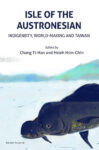
Isle of the Austronesian: Indigeneity, World-Making, and Taiwan
Edited by Chang Ti-han and Hsieh Hsin-chin
136 pages
Balestier Academic
Paperback: UK