
 Booksology
 MỸ DOCUMENTS, by Kevin Nguyen
As with many California high schoolers, my education in Japanese internment came from one book: Jeanne Wakatsuki Houston’s memoir, “Farewell to Manzanar.” My classmates and I quickly arrived at a troubling conundrum. How could a nation founded on freedom strip thousands of its citizens of their rights overnight?
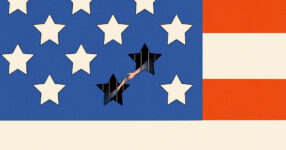
“Mỹ Documents,” Kevin Nguyen’s comically macabre sophomore novel, riffs on that perennial question. The photograph of an internment camp on the front cover, snapped by the legendary photographer Ansel Adams in 1943, underscores Nguyen’s base assumption: Manzanar 2.0 is inevitable. The real question is what kind of culture will emerge when the camps return. (Ironic Big Dog T-shirts as a fashion trend, it turns out.)
At first, the book reads like a realist family novel. Four half siblings stare down their respective comings of age. Ursula, a disaffected young journalist, and Alvin, a fresh-faced Google intern, navigate the work force. Jen and Duncan are students on the edge of self-discovery, at N.Y.U. and an Indiana high school.
They share an emotional wound from the Vietnamese father who abandoned them. Despite their bond, cracks are visible early on: clashing personalities and outlooks on life, differences in class and ethnic identity (Alvin and Ursula are biracial). Nguyen’s prose is wry but lively, and promises a sprawling story about the ordinary dramas that make a life.
Then, a delightful twist arrives, albeit in a horrifying package: A series of terrorist attacks lead to legislation that creates internment camps for Vietnamese Americans. Jen, Duncan and their Vietnamese mother are incarcerated; Ursula and Alvin snag exemptions. With such imaginative risks, Nguyen kicks what has turned out to be an alternate history of the 2010s into high gear.
The writer is a stellar satirist. (The title itself is an inside joke: “Mỹ” is the Vietnamese word for America.) Take, for example, the fact that the legislation responsible for the camps, American Advanced Protections Initiative, shares an abbreviation with the demographic category it targets. An otherwise unassuming sentence takes on a much funnier, and politically astute, resonance: “Being half white certainly helped but didn’t always guarantee exclusion from A.A.P.I.”
Or consider this jab at digital journalism, an industry Nguyen lampoons particularly well: “Ursula was furious when she caught a glimpse of the headline: ‘These People Are Review-Bombing Detention Camps on Google Maps — and It’s Giving Us Life.’”
If Nguyen’s novel had aspired to be funny and nothing more, it would have risked trivializing its thorniest themes: the limits of citizenship, how families exploit one another’s trauma. The grim realities of life in detention are never far from mind, even when delivered in short, pacey chapters. Moments of violence are more impactful because they occur against scenes of humor and occasional mundanity.
At one point in the novel, editors question a book proposal from Jen that focuses on “the idea of joy” found in detention, “when the real story — to them — was the savage reality of it.”
She defends her approach: “To only show those horrors was to dehumanize Vietnamese people,” Nguyen writes. “To illustrate only the misery was to ignore the rich textures of their lives.”
Here and elsewhere, Nguyen deftly finds a middle ground between playful critic and cleareyed observer. Even at its most ridiculous, the book feels eerily plausible. After all, wasn’t the mass detention of Japanese Americans also absurd?
Such a tonally varied novel faces inevitable challenges. To depict Camp Tacoma, where much of the book is set, Nguyen relies on a large cast, making certain relationships more compelling than others. Despite their parents’ outsize impact on the psychological lives of the siblings, their absent father and respective mothers only appear intermittently. At times, the world-building overshadows the emotional fallout. The political thought experiment is just too magnetic.
To call this Trump-era art wouldn’t be wrong, but it would be incomplete. On the one hand, the novel’s shrewd self-awareness conjures contemporary political villains: complacent tech companies, well-meaning liberals, ICE and the Department of Homeland Security.
Yet a longer history is the author’s true concern. Characters discuss Japanese internment often. The imagining of anti-Vietnamese fervor echoes the treatment of Muslims post-9/11. The book is also the product of F.D.R., George W. Bush and other powerful people in American history who succumbed to fear and prejudice.
Preoccupied with dizzying and timely questions about what it means to be American, “Mỹ Documents” is an ambitious novel of ideas. Crucially, it never feels exploitative, cynical or disheartening. Nguyen’s writing is too funny and heartfelt for hopelessness.
“Farewell to Manzanar” was a revelation precisely because it revealed that America is ugly, unfair and hypocritical. The land of the free is also the land of the incarcerated, the detained, the interned. In that sense, Kevin Nguyen has written a very American novel indeed.
MỸ DOCUMENTS | By Kevin Nguyen | One World | 352 pp. | $28


