
 Booksology
 There is a phrase that circulates quietly in strategic discussions, power follows energy. I did not encounter this idea in a classroom or policy report. I encountered it in a conversation.
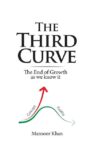
Between 2010 and 2016, while pursuing my MPhil & PhD at Pondicherry University, I attended a book interaction programme. The speaker was Mansoor Khan, better known publicly as a filmmaker, his directorial debut film was Qayamat Se Qayamat Tak. His book, The Third Curve, was not fashionable economics. In fact, at the time, I felt uncomfortable. Many in the room disagreed with him openly. I remember leaving that hall unsettled, not convinced, but unable to dismiss what I had heard. Years later, that unease has only grown.
We are taught, almost from childhood, that money drives the world. Nations succeed or fail based on growth figures, markets, fiscal discipline, and investment confidence. Energy rarely enters this narrative except as a sector. Yet when one pauses to think, this omission feels strange. Without energy, money has no meaning. You cannot build cities, move goods, fight wars, or run digital networks on finance alone. Every modern structure is an energy structure first.
This is where The Third Curve becomes difficult to ignore. Mansoor Khan argues that modern civilisation is not powered by markets, but by cheap energy. Economic growth did not emerge magically from clever systems; it followed coal, oil, and gas. Machines replaced muscles. Distance collapsed. Production exploded. Growth appeared permanent because energy was abundant and inexpensive. But abundance, as history reminds us, is always temporary.
Khan’s argument is unsettling because it suggests that what we call “progress” was a phase, not a destiny. The first curve was rapid expansion driven by fossil fuels. The second curve, which we are now living through, is marked by instability—climate stress, inequality, debt, political anger. The third curve demands something far more radical: learning to live without the assumption of endless growth. This lens helps explain why countries like Venezuela matter so much today.
Venezuela is often spoken about casually, as if its crisis is self-contained. A failed state, an oil economy gone wrong. But that explanation feels lazy. Venezuela holds the world’s largest proven oil reserves, yet struggles to feed its people. That contradiction alone should force deeper questions.
The truth Is uncomfortable. Resources do not automatically translate into prosperity. What matters is how much energy it takes to extract energy. Much of Venezuela’s oil is heavy crude. It is difficult, slow, and costly to produce. As global energy returns decline, even massive reserves lose their power to rescue economies. This is rarely discussed in political debates.
Instead, we hear familiar language—democracy, sanctions, regime change, stability. The United States’ interest in Venezuela is often framed in moral terms. But beneath the rhetoric lies a simpler reality. In a world where growth is slowing and financial systems are stretched thin, energy security becomes survival. Seen this way, Venezuela’s oil is not a promise of abundance. It is a temporary lifeline.
Yet even this lifeline is fragile. Reviving Venezuelan oil production would require time, capital, political calm, and environmental sacrifice. And even if it succeeds, it would not restore the world that once existed. It would only delay a deeper reckoning. The real crisis Is global.
As physical growth has slowed, the world has compensated by inflating financial expectations. Debt has expanded faster than real production. Markets trade future promises that the planet may never be able to deliver. This gap between financial imagination and physical reality is where instability is born. Venezuela’s collapse is therefore not an exception. It is an early signal.
Many societies are moving along the same path, only with better public relations. Growth is still demanded because political legitimacy, debt repayment, and institutional survival depend on it. But the energy foundation that once supported growth is eroding quietly.
This is why Mansoor Khan’s conclusion feels disturbing even today. Growth itself has become dangerous. Not because improvement is wrong, but because infinite expansion on a finite planet is a mathematical impossibility. When growth slows, inequality sharpens. When growth stops, debt suffocates. When growth declines, conflict follows. From this perspective, the struggle over Venezuelan oil is not about ideology. It is about denial.
Even renewable energy, often celebrated as salvation, cannot support the same scale of consumption without fossil fuel backup. Technology can soften decline, but it cannot cancel physical limits. Physics does not negotiate.
The real question, then, is not whether capitalism or socialism will prevail. It is whether societies can redefine prosperity itself. The third curve calls for restraint, resilience, and sufficiency. It calls for honesty—especially from those in power.
Venezuela’s oil will not save the world economy. Nor will controlling it revive an era that has already passed. What it offers instead is a warning. Growth built on finite energy was always temporary. Ignoring that truth has brought us here.
The third curve Is coming, whether we like it or not. The only choice left is whether we arrive there deliberately—or through collapse.
What once sounded radical in a university hall now sounds inevitable. Energy, not money, has always been the real foundation of civilisation. Until we accept that, Venezuela will not be the last place where the illusion of endless growth comes undone.
Get the latest CounterCurrents updates delivered straight to your inbox.
Dr. Ashraf Zainabi is a teacher and researcher based in Gowhar Pora Chadoora J&K


