
man-who-lost-india-meghna-pant-book-review-dystopian-novel-china-india-war-water-crisis-2032 | Bookmark: Flood of creativity, drought of interest
 Booksology
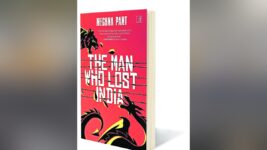
 Meghna Pant has written the novel ‘The Man Who Lost India’ about a dystopian novel that shows what happens when China destroys India along with neighboring countries to deal with the drought in our country… The possibility of a terrible war in the next decade and divine intervention in it. In this, China, which takes the grass of the surrounding countries for water, eventually swallows India as well. India suffers a lot of casualties. The book then depicts the massive cultural, social, economic changes in the life of the common man and how they are imposed. The publishers have clarified that this is a dystopian novel in the blurb itself. So the darkness in the story is expected, the writing is inventive but not interesting enough.
Experts warn from time to time that the third world war will be fought over water. The same thread is held to begin the story. The period of the novel starts from 2032. There is a drought in China. They want to control the maximum amount of water in the world to quench their thirst. For that, they are taking steps to occupy Tibet first and then India. They invaded India and claimed 60 to 70 percent of the world’s water. Even after the almighty China conquered almost the whole of India, the small town of Lalbagh in Punjab has maintained its existence due to the activism of Mahadev. The events of the novel take place there and that is the limit of the story.
Seth is the richest man in Lalbagh. His wife, two children, his servant Ramu and his family are at the center of the story. In front of them all, they have been living in terror ever since the Chinese soldiers killed the head of the family in the neighboring house and kidnapped his family. Chinese officials have arranged for Seth’s business to be taken over by another Shah family in the city. Seth struggles to save his family, especially his beautiful daughter, from being captured by Chinese soldiers. As a solution to that, he decides to marry his daughter into Shah’s own family. Harsh on Vagdutt has a ‘National Identity Card’ and may even get a chance to travel to Israel. If that happens, Seth’s daughter will be saved from the clutches of China. Well, no country in the world is coming to India’s aid in all this turmoil. Israel, however, has a policy of sheltering Indians. Here Seth’s daughter Ida’s teenage (physical) love affair with Ramu’s servant Ramu’s son Manu continues on a parallel level. But the question before them is where will this love take them during the war.
The novel occasionally makes indirect political statements, while attempting to maintain balance. At one place there is a derisive mention of ‘Apne Din’. At the same time, the heir to the country’s biggest political family has fled to Switzerland, fearing China and taking all his wealth. Supporters of both parties should not be angry! While stating that China wants to communistize the whole of India, it also suggests that they are not just lip service to equality for the three people like us.
Some questions arise after reading the novel, the author has tried to answer them in the beginning, but they are not very convincing. China has conquered large parts of the world without directly fighting a world war. America has been weakened by misguided foreign policies, Europe has nothing to do with anyone, and neighboring countries are weak and at the mercy of China. Pakistan is a pawn of China. India is the only country that can compete with China to a small extent. But it is not convincing that China was able to take control of the entire country so easily. No matter how superior China is to India, the political and military leadership does not seem to have put up any resistance. It is not convincing that India simply surrendered to the situation, especially when it describes how China took over one Indian state after another.
If the names of countries that exist in reality are to be used, other reality factors should also be taken into account. If the names of the countries were also fictitious, these questions would not have arisen. Given India’s huge military capabilities, China wants to merge the Indian army into its own army, at the same time India’s defense capability is ineffective, how come?
After the destruction of Lalbagh at the end of the story, the main characters of the story are reunited once again by the grace of God, but now they are all zombies, so they say so themselves. He also declares that the Kali Yuga has ended and the Satya Yuga has begun again. But, this announcement coming from a zombie mouth is not to be believed. The novel leaves a feeling of unsatisfaction after reading it, so it certainly fulfills the criteria of being dystopian. But it is equally true that logically it is not very satisfying.
The Man Who Lost India
Writer – Meghna Pant
Publisher – Simon
& Schuster India
Pages – 308, Price – Rs.499.


