
 Booksology
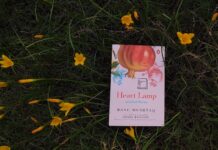
 Heart Lamp, Banu Mushtaq
Trans: Deepa Bhasthi
Penguin Books
Writing a review of Heart Lamp is extraordinarily challenging for multiple reasons. Firstly, structure: reviewing a collection of short stories means evaluating the book as a whole while also acknowledging that the stories have been written over a long period (between 1990 and 2023). Secondly, the book has had an unprecedented reception both in India and globally, largely due to its award-winning run, but also because it is the first Kannada title and the first-ever collection of short stories to receive the £ 50,000 award associated with the International Booker Prize. A litany of reviews, comments, discussions and conversations around a book sometimes can make it more difficult to analyse it, cutting through the many layers of responses and finding your own in the middle of it Finally, its cultural specificities and contexts, and its unique use of language, maintaining nuance from Kannada, Dakhani and Arabic, means the book deserves careful reading. Mushtaq is also the first Indian Muslim to win the coveted prize. All in all, it is a book of many ‘firsts’.
Heart Lamp is a collection of twelve stories, followed by a Translator’s Note. Bhasthi, the translator with whom Mushtaq shares the award, has commented on the linguistic method used by Mushtaq and her in the work. As she and others have highlighted, Mushtaq’s work is squarely located within the Bandaya sahitya tradition – a literary movement in Kannada literature of the 1970s and 80s which was a protest against the hegemony of the upper-caste and mostly male writing of the time, and an ode to dissent and rebellion. Although, not being able to read or write Kannada, I am in no position to review the translation or capture the nuance of the lingusitic method used, one thing that shines through in the translation – apart from the retention of the original words used which and no italicisation of ‘foreign’ words as is often common in literature, is the fact that the language is sparse, straight-forward and sharp in its delivery. I also hesitated to write this review because, unlike many other books, Heart Lamp – and its author’s life, which has seeped into the pages – is heavily embedded in its cultural contexts and literary traditions, and a reader unacquainted with it runs the risk of misreading it or missing the point entirely. But those representations of the everyday existence of Muslim life in South Asia are what make the book an important read. If one reads about Mushtaq’s life and its many travails and hurdles, one becomes more sensitive to some of the scenes depicted in the stories, such as the titular “Heart Lamp.”
The book does not make for comfortable reading. I shut it down at points and put it aside, but I knew I would come back to finish it. My reactions to it initially were similar to several other ‘Muslim misery memoirs’ (with thanks to Peter Morey for this term) that I had the misfortune of reading. The stereotypical cruel Muslim men (the orthodox mutawalli, the duplicitous and violent husbands, of which there are many in Mushtaq’s book, the casual patriarchal cruelty of Muslim men of various shades, often pointing to their religious hypocrisies) popped out of every page. The single note patriarchal violence was suffocating. It grated when Mushtaq’s female characters – oppressed, depressed, and suppressed in various ways, constantly being forced to have children or limited to their homes or abandoned by their husbands for younger, prettier wives – fit the classic mould of Muslim women in need of rescue. However, some moments make up for it, like the ending of “Fire Rain”, which, while being deeply distressing, also revealed the inner voice of Muslim women when they witness injustice. For a while, it seemed like every skepticism I had about the book was being proven right. I was particularly disappointed in the last story (“Be a Woman Once, Oh Lord!), which, although it was a touching and heart-rending complaint about women’s woes in this world, veered into a deeply problematic territory, in terms of religious belief, questioning the inherent mercy of Allah. But Mushtaq’s literary skill is undeniable. My complaints are less so with the book than the literary award landscape, which rewards and seeks out such depictions of less-than-savoury Muslim social life. Mushtaq, for her part, is truly a gifted writer who, it can be argued, is merely holding up a mirror to the society she clearly witnessed around her. However, when she makes claims such as “for us Muslims”, it is a commonsensical belief that husbands are God on earth, the power of representation must be called into question. Does the author (via her characters) speak for the entire community? What is the role of such stated claims in perpetuating wrongfully held beliefs about a whole community, which, as Mushtaq herself would surely acknowledge, is truly diverse and does not hold onto such singular beliefs – beliefs not backed by their faith?
However, one cannot go into the work expecting Mushtaq to reflect a positive take on the possibilities of an orthodox Islamic society, or one that separates faith from the cultural interpretations that misread and twist it. She comes from a long legacy of rationalist/progressive Kannada writing and thus views religion not as a transcendental or discursive tradition but more to do with how Muslims interpret it in the everyday sense; the few characters that seek to correct these ills, like Zulekha Begum in “Black Cobras”, another beautiful piece of writing, is ineffectual and only offering normative possibilities of justice to a woman who is suffering in a very immediate sense. Those are the characters missing from the society Mushtaq writes about – for every complicit and apathetic Muslim man in power, there are a few corrective voices who can offer some sense of justice. However, some stories, like “The Shroud”, where she moves away from writing directly on the marital relationship, are even more touching.
I found Mushtaq’s sparse, blunt style of writing particularly beautiful – the description of women peering over parapets as “women-shaped lizards” (in the eyes of another character), or this truly unusual line: “After laying the egg of light at dawn, the black hen of ignorance exited…” Ordinary objects, too, find themselves as central characters of some stories – the Zam-Zam sprinkled shroud; an old woman’s beloved prayer mat, a lungi, a pair of women’s heels, a bottle of Pepsi, jasmine flowers, a mango tree. Mushtaq traces her surroundings with care and attention, which is another major aspect that makes the work important.
I do think that Heart Lamp would not be easy reading for many people who would see Mushtaq’s oeuvre and these stories as replicating stereotypes, particularly about Muslim gender relations or societal hierarchies; especially since we are very familiar with the positive reception of similar works in the world of literature and academia. But the work is nevertheless strangely compelling, especially some stories that stand out in your mind long after the book is closed. I would encourage readers first to read the book on its own, let the work speak to them, and also familiarise themselves with the spatial context of the book, to give it the patient reading that an author of her skill deserves. It will undoubtedly make for complicated reading. But one must acknowledge that apart from the politics surrounding the book, and Mushtaq’s own identification as a rationalist writer, the society she depicts – deeply unequal, with injustice embedded in every space – requires our critical gaze and attention.


